
Introduction
Hong Kong recorded 37,953 new cancer diagnoses in 2023, an increase of 7.3% compared with the previous year, while cancer remained the leading cause of death locally. At the same time, recent regional claims analysis has highlighted a growing number of diagnoses occurring during employees’ active working years. For employers, these trends have practical implications for workforce resilience, absence management and the adequacy of existing employee benefits programmes.
Cancer is often considered primarily from the perspective of medical treatment and individual health outcomes. However, from an employer’s perspective, a serious illness can affect productivity, succession planning, team continuity and employee wellbeing. A benefits programme that performs well for routine medical claims may be tested very differently when an employee requires specialist consultations, advanced diagnostics, prolonged treatment or extended time away from work.
Why cancer trends matter to employers
The discussion is not about predicting which employees may become ill. It is about recognising that serious medical conditions are a reality within every workforce, regardless of industry or company size.
Official Hong Kong figures show that more than 100 new cancer cases are diagnosed every day. Lung cancer, breast cancer, colorectal cancer and prostate cancer remain among the most common diagnoses locally. These are conditions that will inevitably affect employees, family members and dependants covered under company-sponsored medical plans.
For employers, the question is whether existing benefits arrangements provide appropriate support if such a diagnosis occurs.
When group medical insurance is tested
Many employee benefits programmes perform adequately during routine use. Outpatient consultations, physiotherapy treatments and routine prescriptions rarely create material issues for either the employee or the employer.
The true test of a policy often comes when an employee requires significant treatment.
At that point, aspects such as annual limits, specialist access, hospital networks, direct billing arrangements and policy wording become considerably more important than headline premiums.
This is one reason employers regularly review their Group Medical Insurance arrangements to ensure they remain aligned with the workforce they are intended to support.
The business impact goes beyond the medical claim
Medical costs are only part of the equation.
When an employee receives a serious diagnosis, employers may face:
- Extended periods of absence
- Temporary redistribution of responsibilities
- Recruitment of interim resources
- Increased management oversight
- Additional support requirements for affected teams
A well-structured benefits programme cannot eliminate these challenges, but it can help employees access treatment more efficiently and reduce unnecessary administrative complications during an already difficult period.
Why screening benefits deserve attention
One area frequently discussed during employee benefits reviews is screening and preventative care.
The value of screening is not limited to health outcomes. From an employer perspective, it may also support earlier intervention, faster access to treatment pathways and a clearer understanding of available healthcare options.
When reviewing a group medical programme, employers may wish to assess whether preventative benefits, health assessments and specialist consultations remain appropriate for their workforce profile.
What employers should review
A benefits review does not necessarily mean changing insurers or increasing costs.
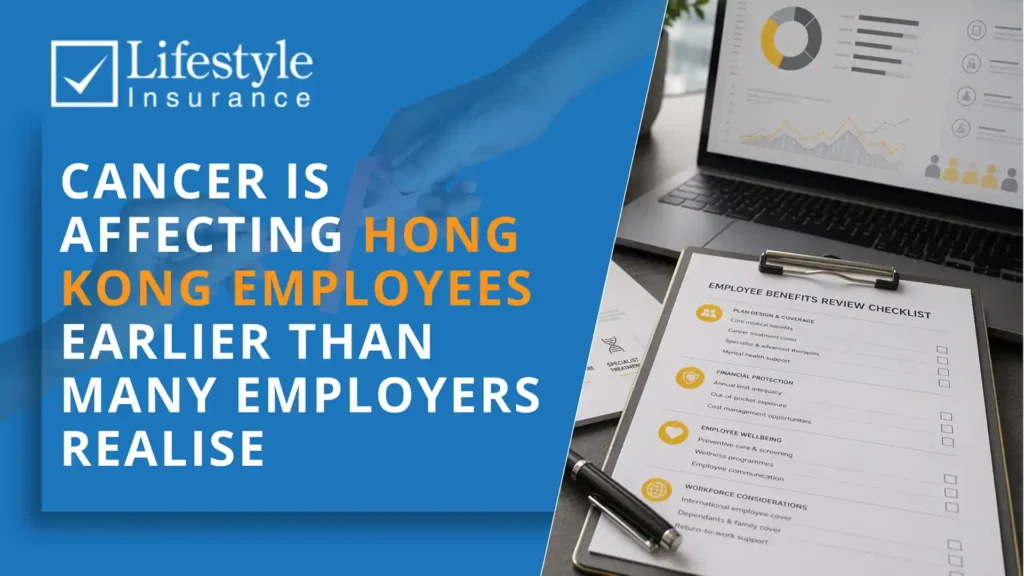
In many cases, employers simply want clarity regarding:
- Annual benefit limits
- Cancer treatment provisions
- Outpatient specialist cover
- Direct billing arrangements
- Dependant eligibility
- International coverage requirements
- Claims procedures
An independent review can help determine whether the current arrangement remains appropriate or whether adjustments should be considered before renewal.
Conclusion
Cancer remains one of the most significant health challenges affecting Hong Kong residents. For employers, this reinforces the value of periodically reviewing employee benefits and ensuring that group medical insurance arrangements continue to reflect both workforce needs and market developments.
FAQs
Yes, many group medical plans cover cancer treatment, although limits, exclusions and reimbursement levels vary between insurers.
Yes. Annual reviews help ensure benefits remain aligned with workforce requirements and current market conditions.
Some plans include screening benefits, while others require additional coverage or optional benefits.
Direct billing allows eligible medical expenses to be settled directly with healthcare providers without employees paying upfront.
Yes. Many group medical insurance arrangements allow spouses and children to be included, subject to insurer terms.
Yes. Some insurers offer regional or worldwide coverage options for employees and their dependants.
